
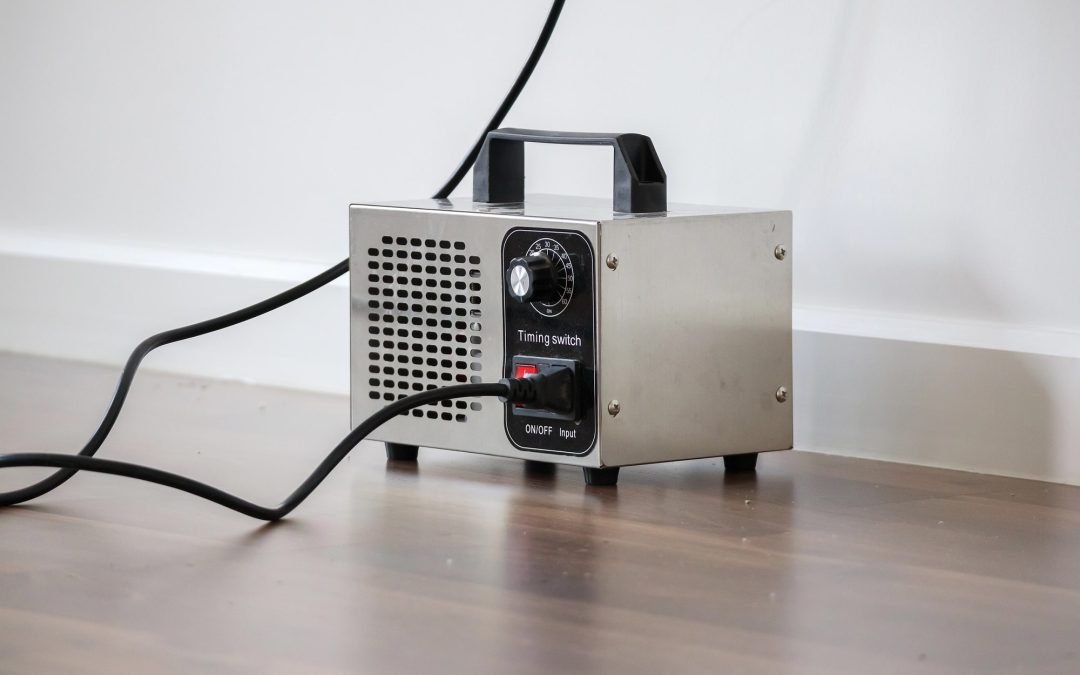
When you’re dealing with a lingering smell in your home—whether from smoke, pets, cooking, or water damage—the promise of an ozone generator can sound like a miracle solution. Just plug it in, let it run, and supposedly, your odor problems vanish.
But here’s the truth: ozone generators are far from the permanent odor-elimination solution they claim to be. In many cases, they mask the smell, and when misused, they can actually put your health at risk. If you’re serious about getting rid of a stubborn odor for good, it’s important to understand the limitations of ozone and explore better, safer options.
How Ozone Generators Work
Ozone generators produce ozone (O₃), a molecule made up of three oxygen atoms. The idea is that the third oxygen atom in ozone is unstable and will break away, attaching itself to odor-causing molecules and neutralizing them through a chemical reaction called oxidation.
In theory, this sounds effective. Ozone is a powerful oxidizer, and when it comes into direct contact with certain airborne particles, it can break them down. That’s why it’s often marketed as a tool for removing odors from the air.
The Temporary Nature of Ozone Treatment
The problem is that most odors don’t just float around in the air—they’re embedded in surfaces. Smoke particles sink into drywall, carpets, upholstery, and insulation. Pet urine can soak deep into wood flooring. Mold odors cling to porous materials and hide in hidden cavities.
Ozone simply can’t reach deep enough into these materials to destroy the source of the smell. So even if your home smells better right after using an ozone generator, that improvement is usually short-lived. Once the ozone has dissipated, the odor tends to creep back.
This is why so many homeowners are disappointed when they invest in ozone treatments. The source of the smell hasn’t been removed—it’s just been temporarily overwhelmed by another chemical.
Ozone’s Limited Reach
Another major issue is ozone’s inability to penetrate surfaces. It can only oxidize what it physically touches. If the odor source is behind drywall, inside an HVAC system, or soaked into fabrics and foam, ozone can’t reach it.
Some ozone generators are promoted as being powerful enough to saturate entire homes, but even at higher levels, ozone simply doesn’t diffuse evenly into tight crevices or dense materials. The end result? Incomplete treatment and recurring smells.
Health and Safety Concerns
Perhaps most concerning of all is the health risk associated with ozone exposure. Ozone is not safe for humans or pets to breathe in significant quantities. According to the Environmental Protection Agency (EPA), even relatively low levels of ozone can cause chest pain, coughing, shortness of breath, and throat irritation. Prolonged exposure can exacerbate asthma and other respiratory conditions.
To be even marginally effective against odors, ozone generators must release levels of ozone far above what is considered safe in an occupied space. This means that during and after ozone treatment, the area must be completely vacated—often for extended periods. And even then, there’s no guarantee that the odor will be gone when you return.
Real Odor Elimination Requires Source Removal
To eliminate an odor permanently, you have to remove or destroy its source—not just mask it. That typically involves:
- Deep cleaning and surface treatment
- Replacing contaminated materials
- Neutralizing odor molecules on a chemical level
Unfortunately, ozone generators fall short in all of these categories. They can’t clean surfaces, extract particles from porous materials, or decontaminate areas like HVAC ducts or behind walls. At best, they’re a partial solution. At worst, they’re a health hazard.
Common Misconceptions About Ozone Generators
Let’s clear up a few myths:
- “If the smell is gone, the problem is fixed.”
Not necessarily. Ozone can suppress odors for a short time, but without targeting the source, the issue will return. - “Ozone is a natural and safe deodorizer.”
While ozone exists in nature, high concentrations are dangerous indoors and strictly regulated for a reason. - “Ozone purifies the air.”
Ozone does not remove particles, dust, or allergens from the air the way a proper air purifier with HEPA filtration does.
The Biosweep of Alabama Difference: Safe, Proven, Permanent
If you’re frustrated with recurring odors that just won’t go away—no matter how many times you’ve tried to “shock” your home with ozone—it’s time to call in the professionals.
Biosweep of Alabama uses a cutting-edge process called photocatalytic oxidation—a technology far more advanced than ozone. This process not only neutralizes odor molecules in the air but also penetrates deep into materials to target odors at the molecular level. Unlike ozone generators, it’s designed for complete, permanent odor elimination, not just temporary relief.
And most importantly, Biosweep’s process is safe. After treatment, your space is immediately reoccupiable—no need to stay out for days or worry about harmful residue. Whether you’re dealing with smoke, pet damage, mold, cooking smells, or any other persistent odor, Biosweep can eliminate it.
At Biosweep of Alabama, we stand by our results. If you’re not satisfied, we’ll come back and retreat for free.
Don’t Settle for a Temporary Fix
Your home should smell clean and fresh every day—not just for a few hours after running an ozone machine. Let Biosweep of Alabama show you how advanced science and expert care can deliver a truly odor-free environment, permanently.
Contact Biosweep of Alabama today to schedule a consultation and take the first step toward a fresher, safer home.